
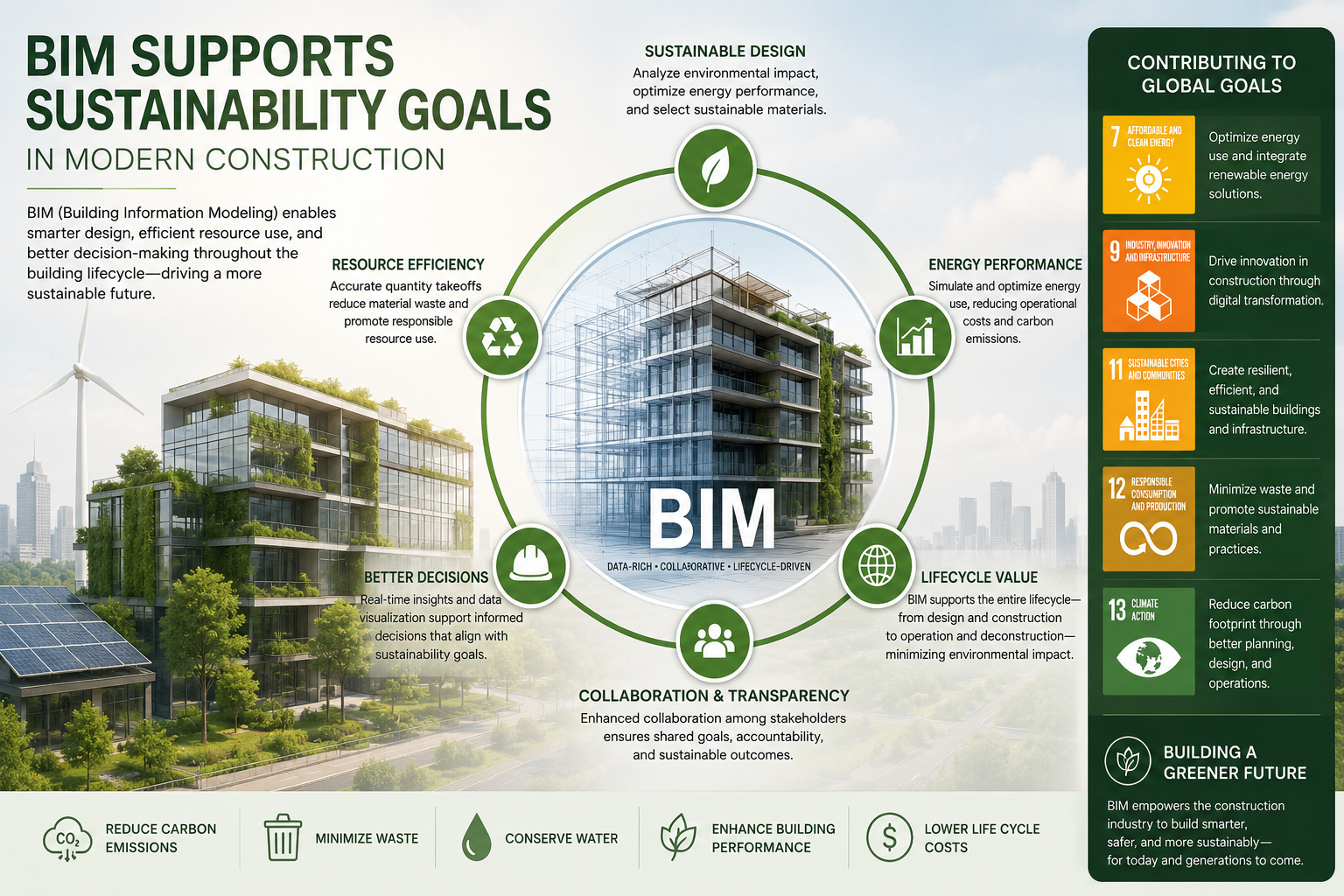
Key Sustainability Benefits of BIM
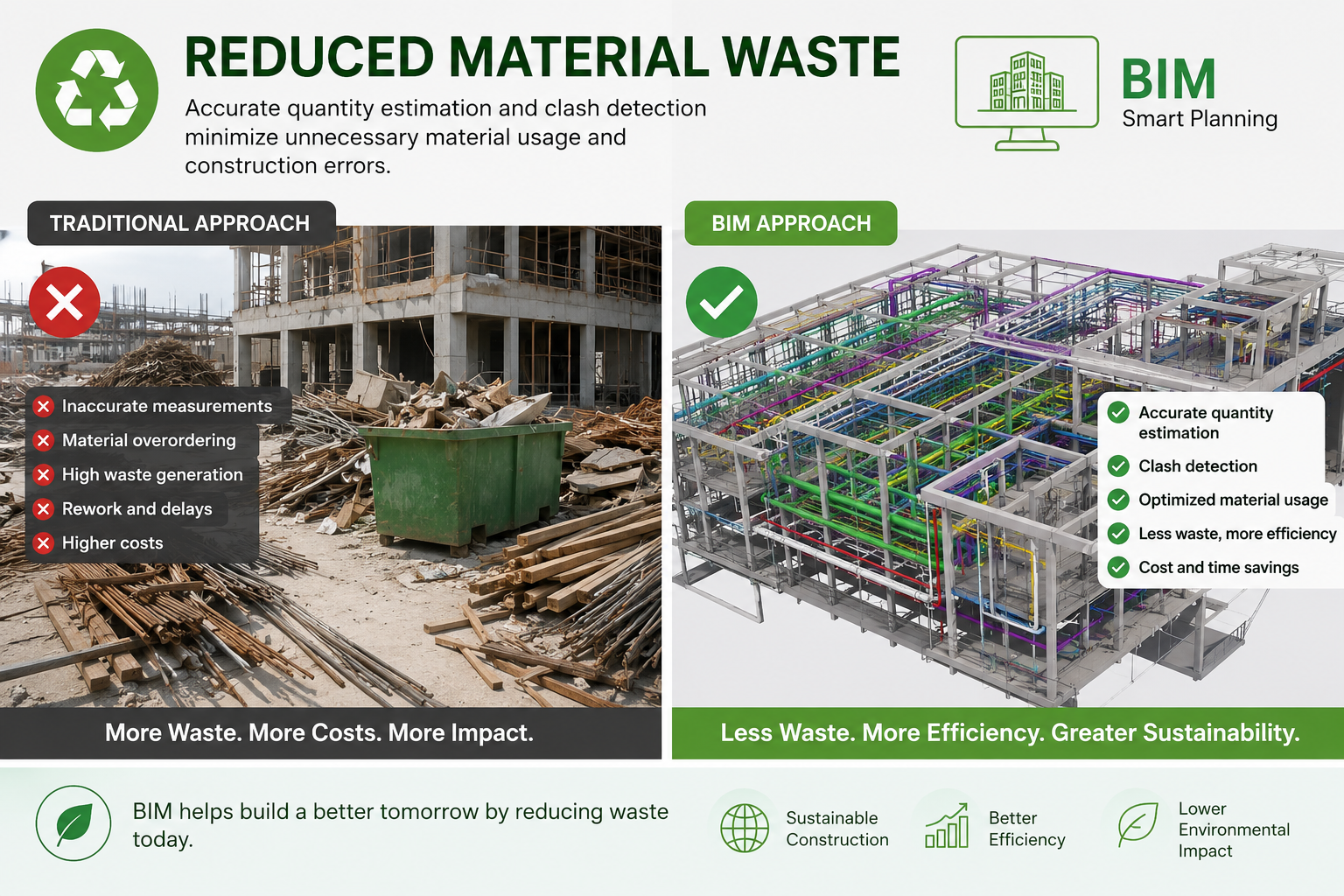
✅ Reduced Material Waste
Accurate quantity estimation and clash detection minimize unnecessary material usage and construction errors.
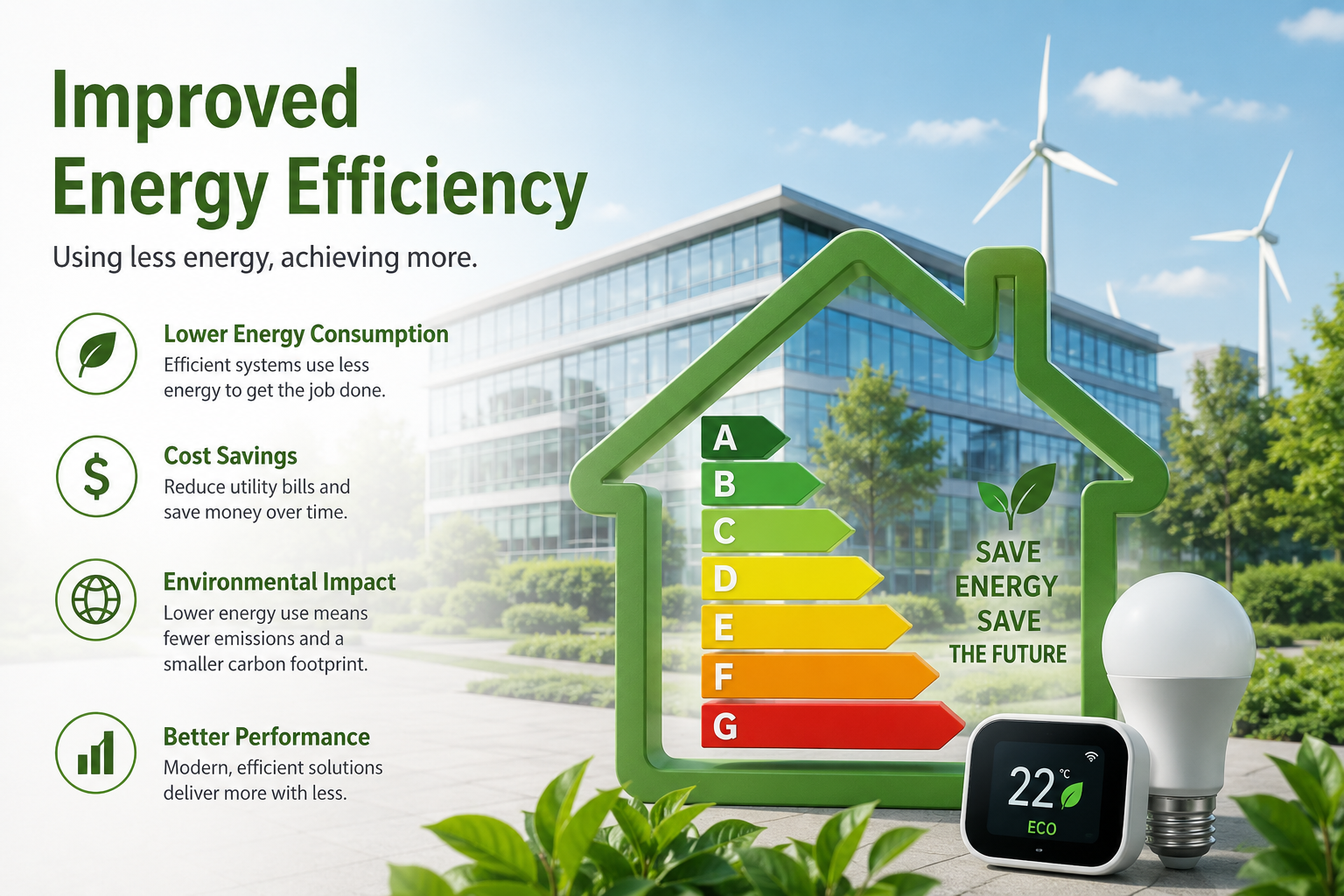
BIM enables energy analysis and performance simulations to optimize building design for lower energy consumption.
Digital coordination improves planning, scheduling, and resource allocation, reducing project delays and operational waste.
BIM supports facility management with accurate asset information, helping maintain buildings efficiently throughout their lifecycle.
Efficient planning, reduced rework, and optimized construction processes contribute to lower carbon emissions.
We provide advanced BIM solutions that support sustainable construction practices and modern infrastructure development.
Building Information Modeling (BIM) is transforming the construction industry by enabling smarter planning, efficient resource management, and sustainable building practices. By integrating design, construction, and operational data into a single digital model, BIM helps reduce environmental impact while improving project performance and long-term efficiency.
Benefits of BIM in Sustainable Construction
- Enhanced building performance
- Reduced construction waste
- Improved resource management
- Lower operational and maintenance costs
- Better environmental compliance
- Increased project efficiency and accuracy
- Building a Greener Future with BIM
Making Every Step Easy
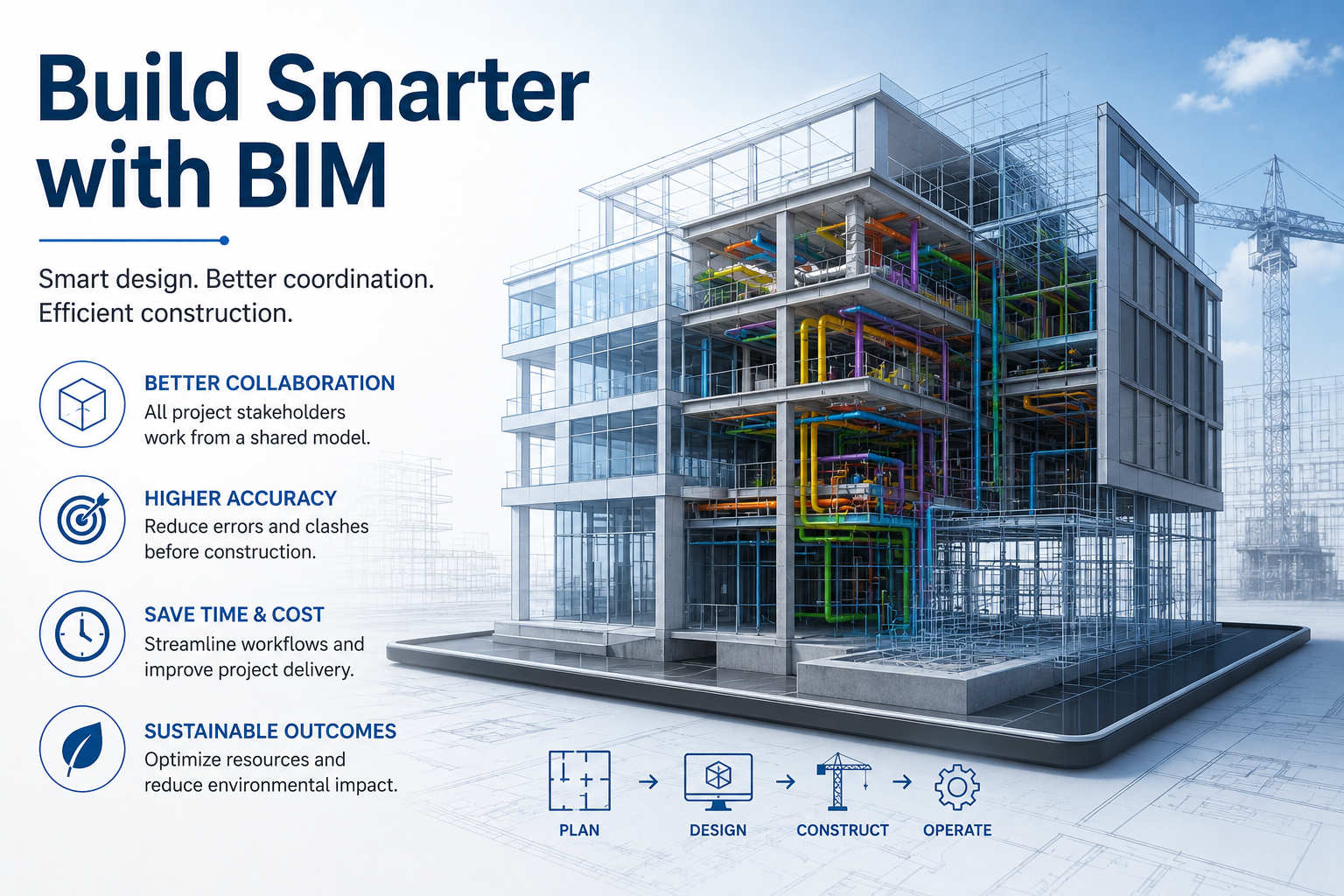
BIM creates a single source of truth for all project information. Updates made in the model automatically reflect across all drawings and documents, ensuring consistency and reducing errors.
BIM is more than a digital construction tool. It is a powerful solution for achieving sustainability goals in modern construction. As the industry moves toward smarter and eco-friendly development, BIM plays a critical role in creating resilient, efficient, and environmentally responsible buildings for the future.
Conclusion
BIM is revolutionizing modern construction by supporting smarter, more sustainable building practices. From reducing material waste and improving energy efficiency to enhancing collaboration and lifecycle management, BIM helps construction teams achieve environmental and operational goals more effectively. As sustainability becomes a key priority in the industry, BIM continues to play a vital role in delivering greener, cost-effective, and future-ready construction projects.
Leave a Reply
Your email address will not be published.