


Most of the discussions on building information modelling focus on design and construction aspects, such as coordination, clash detection, and clean handover drawings. But the most useful part of a BIM model typically starts after the building. However, the most valuable aspect of a BIM model usually begins once the building is complete. This is where BIM for Facility Management (FM) comes in, and many building owners in the United Arab Emirates are still unaware of this.
Treating BIM as a design-phase tool alone is a missed opportunity in a market like Dubai and the wider UAE, where mega-developments, mixed-use towers, and infrastructure assets have long operational lifespans. A suitable model can serve as the basis for the entire working life of a building.
Why Facility Management Needs BIM?
Traditional facilities management is based on scattered records: PDFs of manuals, spreadsheets, paper warranty cards, and tribal knowledge with whoever was on the original project team. And when that person leaves, the knowledge leaves with them.
BIM model created with FM in mind keeps that data centralized, spatial, and searchable. A facilities team can click on a 3D asset to instantly see its make, model, install date, warranty status, and maintenance history, instead of flipping through binders to determine which chiller services which zone.
LOD 500: Where Construction Ends and Operations BeginScan to BIM is the process for 500 level of development is the ‘as-built’ condition of a facility—validated in the field, not just on paper. This is the LOD tier that FM teams actually need. The LOD 500 level represents what was actually built, including any changes made on site during construction.
- Verified as-built geometry and locations for all major systems
- Equipment manufacturer data, serial numbers, and specifications
- Commissioning and installation dates
- Expiry and terms of warranty
- Contacts and schedules for service and maintenance
If that level of accuracy is not met, the facility teams are left with a model that appears correct but does not reflect reality, which undermines the entire purpose.

Key Applications of BIM in Facility Management | LOD Levels and Their Relevance to Facility Management
The most frequent types of clash are: Hard Clash Not all LOD tiers are equally useful once the building is in use. Here is a table mapping each level to FM value:
Equipment and Maintenance Clearances Clashes
Through coordinated model, these systems could be reviewed and coordinated before installation.
- Equipment operating space
- Maintenance
- Inspection
- Equipment replacement
- Equipment access
- Safety
| LOD Level | Description | FM Usefulness |
|---|---|---|
| LOD 300 | Generic systems, exact geometry | Low – good for design coordination, not operations |
| LOD 350 | Systems shown with interface detail | Moderate - good for understanding system relationships |
| LOD 400 | Detail at construction level | Moderate – useful for planning of maintenance access |
| LOD 500 | Verified as-built, field-validated | High - the standard FM teams should insist on at handover |
BIM models give an opportunity to review these requirements spatially and not just through independent 2D details.
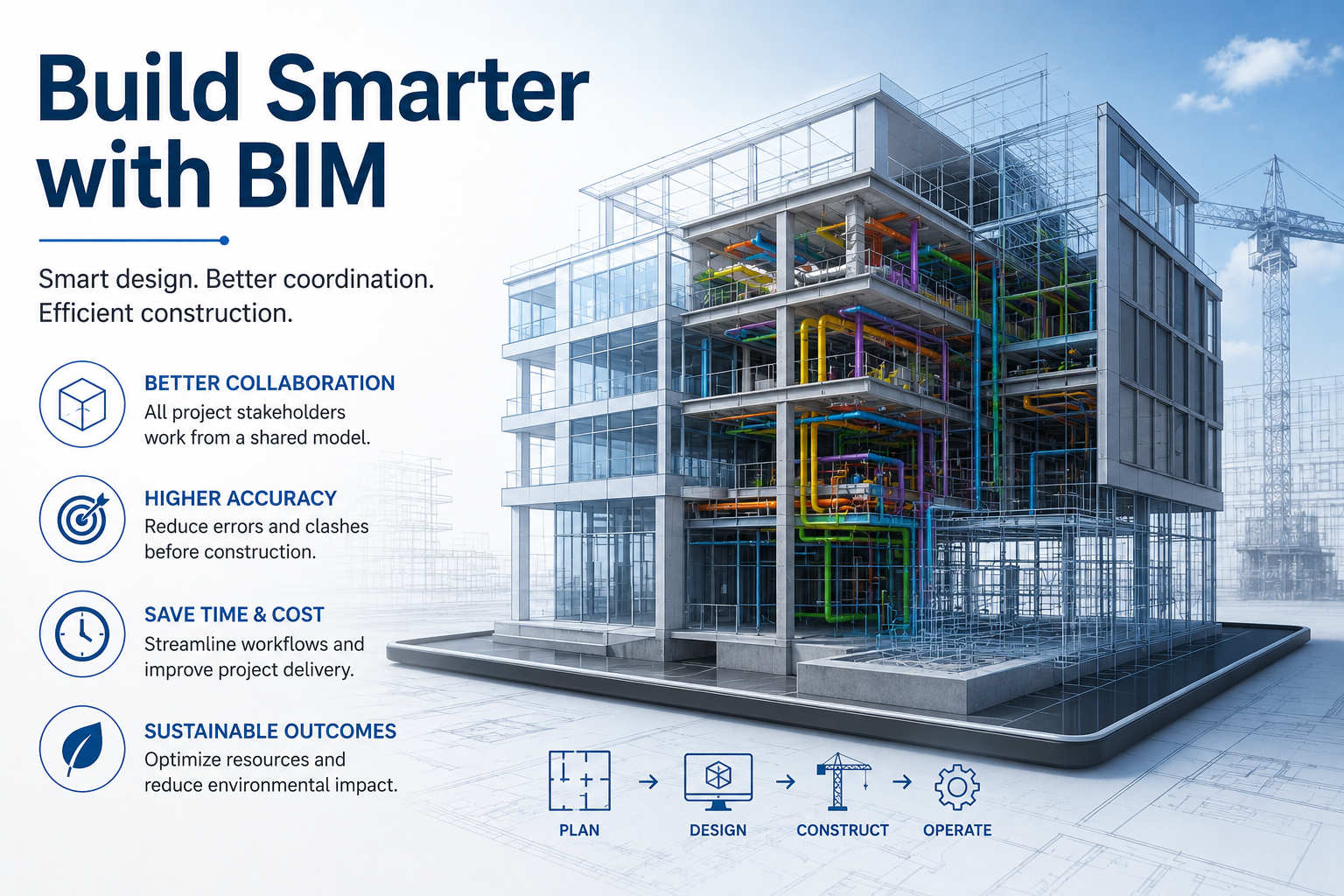
This is why the FM requirements should be written into the BIM Execution Plan to specifically call for MEP and structural systems to have LOD 500 deliverables, rather than assuming design-stage LOD is “good enough.
Common problems when moving from BIM to FM
BIM-for-FM initiatives tend to underperform for several recurring reasons, despite positive intent
Dump of Data Without Structure
Model that has all possible parameters, but no consistent naming convention or schema.
FM teams don’t need more data They need structured, standardized data.
Software LimitationsAlthough design tools such as Revit produce rich models, many CMMS platforms do not read this format natively.
When there is no intermediate data exchange standard Information can be lost during translation. An intermediate data exchange standard is essential to prevent the loss of valuable information in translation.
FM teams don’t need more data They need structured, standardized data.
Registration and Asset Tracking All MEP equipment from AHUs to fire pumps can be tagged and linked to its data sheet in the model. That turns a static 3D file into a live asset register.
Maintenance - Preventive and Predictive When connected to a computerized maintenance management system (CMMS), the BIM model can send maintenance reminders based on when things were installed or how they are used, helping facility teams stop problems before they happen instead of just fixing them.
Space and Occupant Management BIM can record how space is used, location of lease restrictions and how many people are in large commercial or mixed-use buildings, which will be useful to manage operations and plan future updates.
Renovation and Retrofit Planning This means that any future renovation, fit-out or retrofit project starts from an accurate baseline, not from outdated design drawings, as the model reflects true as-built conditions.
Energy and sustainability monitoring Integration of BIM data with building management systems (BMS) allows ongoing tracking of energy performance, which is increasingly important as UAE projects seek green building certifications and sustainability standards.
Why this is important for UAE asset ownersThe UAE’s construction pipeline has a large share of long-life assets airports, hospitals, mixed-use towers, and infrastructure where the operational expenses over the 20 to 30-year life cycle are much greater than the original construction costs. An efficient FM model directly translates into lower operating spend, faster response times on maintenance issues, and higher asset value in the long term.
BIM mandates continue to grow across the region, and owners that plan for the FM phase from day one, rather than thinking of it as an afterthought during construction, get a lot more value for every dirham spent on modelling.
- Architectural model
- Structural model
- Mechanical model
- Electrical model
- Plumbing model
- Fire protection model
Overview
Besides, the models of specialty subcontractors should be collected too. also, before starting the BIM for Facility Management, it should be made sure that model versions and coordinates have been verified.
Leave a Reply
Your email address will not be published.